

Creating Tools for Dynamic Arab Futures
-
Through FAHRAS — our research platform and public, searchable database — we trace how futurist cultural productions by Arab artists are acquired, described (or excluded) by major institutions around the world.
From contemporary art and literature to film and biography, FAHRAS maps the presence and absence of Arab speculative practices across global collections. Its first major initiative, launching in 2026, the Futurist Arab Index (FAI), gathers critical data and visual tools that support artists, curators, and educators imagining alternative futures.
-
Mainstream AI excludes much of the Arab world from its datasets. Our work intervenes by integrating ancestral knowledge, speculative fiction, and cultural archives into learning systems — shifting how intelligence is built, aligned, and understood.
Through our AI track, we also host visiting scholars and creative fellows who bring region-specific expertise into dialogue with machine learning — not as subjects of data, but as authors of new architectures for knowing.
-
Our courses treat fiction as method—a way to research, publish, and prototype new realities.
Most recently, Publication as Worldmaking, taught at MIT is a studio-based seminar where students explore publishing as a political tool and fiction as a form of infrastructure.
Through courseware, readings, and real-world projects, we train artists, writers, and designers to build speculative systems grounded in culture, memory, and imagination.
-
We activate storytelling as a civic practice through architectural experiments, mobile classrooms, and site-specific interventions like Streetschool.
These aren’t exhibitions. They’re embedded realities that turn sidewalks into studios, plazas into publications, and passersby into participants.
By collaborating with institutions, municipalities, and communities, we prototype how public space can host new forms of learning, memory, and worldmaking.

An Institute Advancing Public Imagination in the Arab World
The Institute for Worldmaking (IWM) is a global cultural research lab and public platform developing tools for imagining and building dynamic futures for and from the Arab world.
Through digital tools, and educational programs, research fellowships, publications and exhibitions, IWM supports artists, researchers, and institutions developing speculative work at the intersection of fiction, technology, and cultural practices.

Streetschool at Sharjah Biennial 2025
FAHRAS: Futurist Arab Index
FAHRAS is a publishing and research platform that documents the speculative practices shaping Arab culture — past, present, and yet to come.
From museum acquisitions to literature, film and design, FAHRAS maps speculative works and people across disciplines and generations. We collect, publish, and connect the stories that imagine and make the future in the Arab World.

-
We track how Arab artists experimenting with speculative practices are acquired, described (or excluded) by major museums — mapping patterns of visibility and absence across global collections.
-
From speculative novels to sci-fi zines — we trace the stories that challenge what’s possible in Arab storytelling.
-
Cinematic futures, speculative series and visionary shorts. FAHRAS maps film as a site of invention and world-making.
-
We produce 4 books per year, featuring emerging artists, architects, writers, and cultural workers whose practices expand the edges of Arab futurity.
“To surface underrecognized practices and shift how Arab imagination is collected, described, and made public.”
Fahras Book Series: 4 publications per year spotlighting emerging speculative voices

Searchable Index: people, projects, concepts across media and geography


If our stories aren’t in the dataset, the future won’t speak in our language.
Enriching AI Datasets
The AI track at the Institute for Worldmaking tackles a foundational problem in today’s intelligent systems: Arab cultural knowledge is missing from the dataset.
We integrate underrepresented materials — from fiction and philosophy to art and ancestral archives — directly into AI environments to expand what machines can learn, recognize, and reproduce.
-
Developing frameworks for culturally rooted alignment that go beyond Western universalism.
-
Training data with Arab fiction, memory, cosmology, and ethics — reframing what AI understands as intelligence.
-
Experimental models and prompt libraries that reflect alternative worldviews.
We are training future intelligence to speak our cultures
Developing research fellowships exploring Arab frameworks for AI alignment


Fiction as dataset: language models built from regional traditions
Experimental prototypes and publications

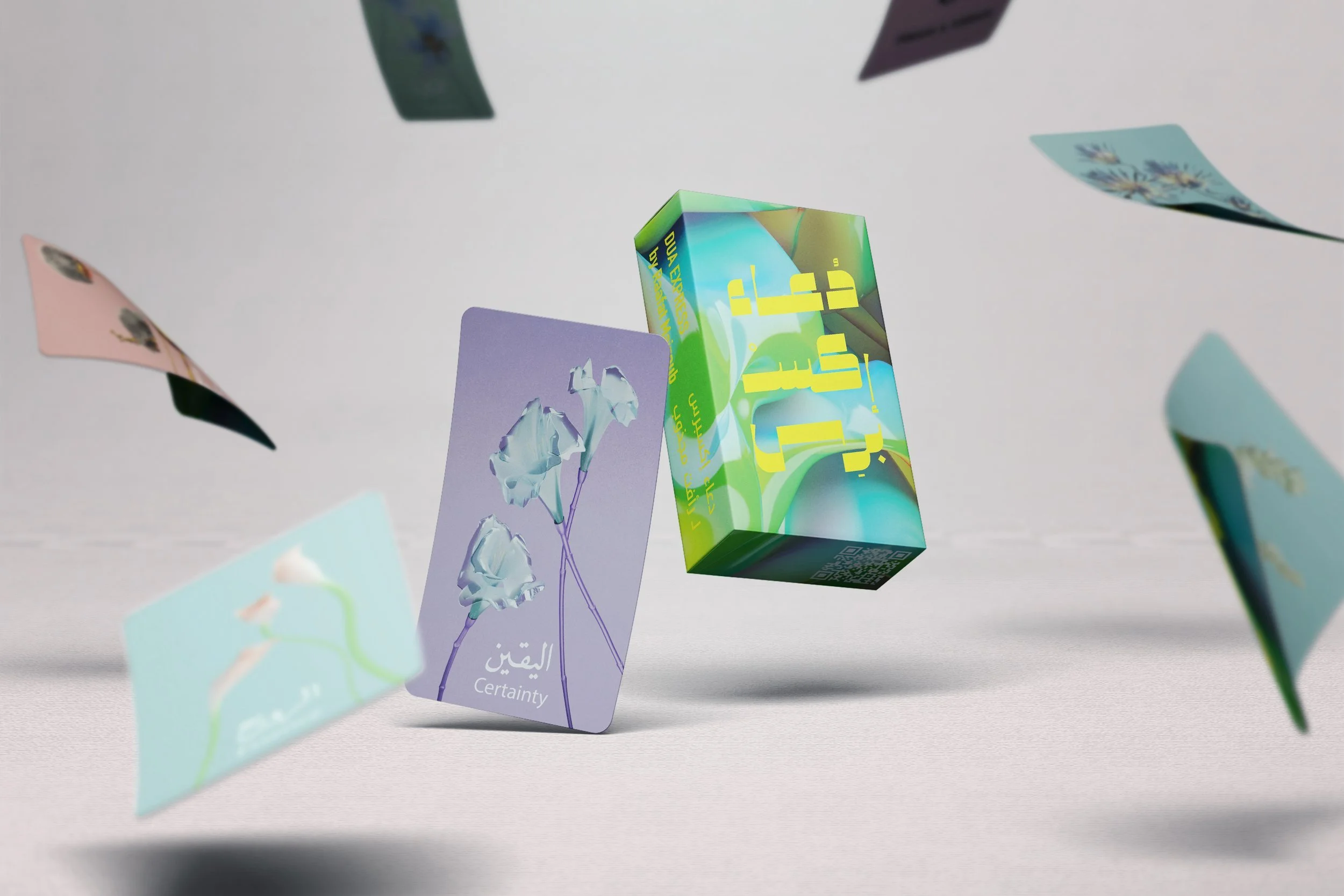
Dua Express
Traditional Crafts as Future Technologies
Through our WRKBK Program, we activate traditional craft as a living, adaptive system — one that connects design, local economies, and cultural knowledge to contemporary needs and emerging technologies. As part of the Institute for Worldmaking, the program repositions traditional crafts not as nostalgic heritage, but as a form of situated intelligence — one that can inform more equitable, regenerative, and culturally aligned infrastructures.
Through hands-on collaborations with craftspeople and small businesses across the Arab world, WRKBK supports fieldwork that is locally embedded and globally relevant. The program offers design and strategy consultations, product development support, and field training for emerging designers — connecting them with city-based craft economies.
Crucially, WRKBK is also a data-building platform. The knowledge gathered through interviews, mappings, and collaborations feeds into IWM’s broader efforts to enrich machine learning datasets with nuanced, underrepresented cultural knowledge — helping build a living, Arab-led database that informs future technologies with place-based intelligence.

-
Documenting traditional knowledge systems to support IWM’s AI workstream and enrich overlooked datasets with meaningful nuance
-
Free design consultation for local craftspeople and entrepreneurs; brand systems built from the ground up, not top-down
-
Training local students to conduct research in their own communities — fostering dignified, reciprocal relationships across generations
-
Craft ecosystems based on reuse, social continuity, and cultural authorship — not just artisanal aesthetics

Document craft practices to enrich dynamic data from the region


Free strategy and product development for artisans and small businesses
Train students in context-based, collaborative fieldwork across the region


We create dynamic, generative data to catalyze Arab creative production.
Teaching Fiction as a Futurist Research Method
IWM’s pedagogical track trains artists, designers, and institutions to use fiction as a tool for worldmaking — not just in writing, but in publishing, teaching, and spatial practice.
WRKBK Studio develops field-based documentation practices that treat craft ecosystems, workshops, and spatial environments as living archives. Students work as enumerators and researchers, building structured datasets that translate embodied knowledge into cultural infrastructure.
The School for Arab Futures convenes artists, architects, and thinkers to prototype public learning formats that blur the line between exhibition, classroom, and civic space. Through collective construction, publishing, and debate, participants rehearse alternative institutional and spatial futures.
Alongside this, we host workshops and labs in Riyadh, Beirut, and Sharjah that combine design, research, and social imagination.
-
This course, offered through the Art, Culture and Technology program at MIT, explores publication as an interdisciplinary and generative practice for worldmaking and public engagement. Students will investigate speculative fiction, editorial strategies, and a wide range of publication methods—from traditional forms such as risograph printing and bookbinding to experimental modes involving digital media, performance, architecture, political systems, and AI.
Grounded in the understanding of publishing as the act of “making public,” the course invites students to reframe their individual research and creative projects through the lens of publication as artistic intervention. Emphasis is placed on publication not only as an outcome, but as a process of collective meaning-making. The semester culminates in a collective exhibition or public presentation of student work.
-
This workshop at MISK Art Institute supports Saudi artists in developing new or ongoing works that engage with questions of publicness, authorship, and transformation. Participants are encouraged to explore publishing, exhibition, performance, or other formats as methods of reaching and shaping audiences.
Through one-on-one guidance, group critique, and peer exchange, the program emphasizes process, experimentation, and critical reflection. The residency culminates in a collective showcase that presents each participant’s evolving understanding of their practice as a tool for connection and cultural production. -
Hosted at the Beirut Art Center, this workshop supports students transitioning into university by treating storytelling as a tool for navigating uncertainty and shaping future careers. Through writing and collective exercises, participants explore narrative as a method for reimagining rigid academic paths into flexible, interdisciplinary trajectories. The workshop positions each student not just as a learner, but as an author of the world they want to build.
-
Hosted at Sharjah Art Foundation, this three-day workshop explores fiction as a method for navigating complexity and prototyping futures. Affirmative Drifting ✦ كل شي صح invites participants to experiment with intuition, narrative, and world-building tools drawn from Arab knowledge systems, speculative practice, and everyday experience. Embracing uncertainty as a generative space, the course offers a framework for rethinking authorship, decision-making, and creative direction across disciplines.

Studio courses at MIT and regionally through WRKBK Studio and the School for Arab Futures
Global workshops and co-creation assemblies

Experimental learning labs


We don’t just tell our stories. We build the worlds that make them possible.
Cultural Placemaking
IWM’s Cultural Placemaking track develops narrative-driven interventions that reimagine how space is used, understood, and experienced. Through collaborations with institutions, municipalities, and cultural partners, we prototype new forms of civic engagement grounded in storytelling, design, and cultural memory.
Each project responds to its social and geographic context, drawing from local narratives and cultural codes to create meaningful, immersive experiences that invite participation, dialogue, and transformation.
Our work spans site-specific installations, architectural prototypes, and performative infrastructures that challenge dominant systems of place-making and propose alternative ways of gathering, imagining, and making public meaning.

Working with government bodies, museums, and civic actors to rethink how infrastructure can host immersive learning and cultural imagination

Grounding each intervention in the material, social, and emotional realities of place

-
Streetschool is a mobile classroom and public installation that transforms urban space into a site of collective learning and radical hospitality. It invites passersby, students, and community members to participate in storytelling, knowledge exchange, and civic speculation — outside of traditional institutions.
Each iteration of Streetschool responds to its host city’s cultural and spatial context, creating temporary environments for discussion, performance, and design. From Sharjah to Beirut, Streetschool demonstrates how education can emerge from within the street itself — as a collaborative, open-ended, and fiction-driven practice of worldmaking.
-
Lobby Q is a collaborative intervention with the A. M. Qattan Foundation that reimagines their lobby as a dynamic, communal learning space. Moving beyond passive function, the lobby is transformed into a site of encounter — furnished with narrative objects that reflect its local context while connecting to IWM’s living knowledge databases.
As both a physical installation and a digital interface, Lobby Q becomes a porous threshold: between institution and community, between space and story, between memory and real-time research. It challenges what a lobby can be — turning waiting into learning, and presence into participation.
The importance of participatory placemaking is that it turns public space into a platform for collective imagination.

IWM Reading Room, Sursock Museum, Beirut 2024
Meet the Team
-

Raafat Majzoub
FOUNDING DIRECTOR
-

Salem Shamieh
DESIGN LEAD
-
Nathalie Attallah
RESEARCH & PARTNERSHIP LEAD
-
Walid Abu Saifan
TECHNICAL LEAD